
Keep it Wild
Potential exerpt from my BIP (book in progress)

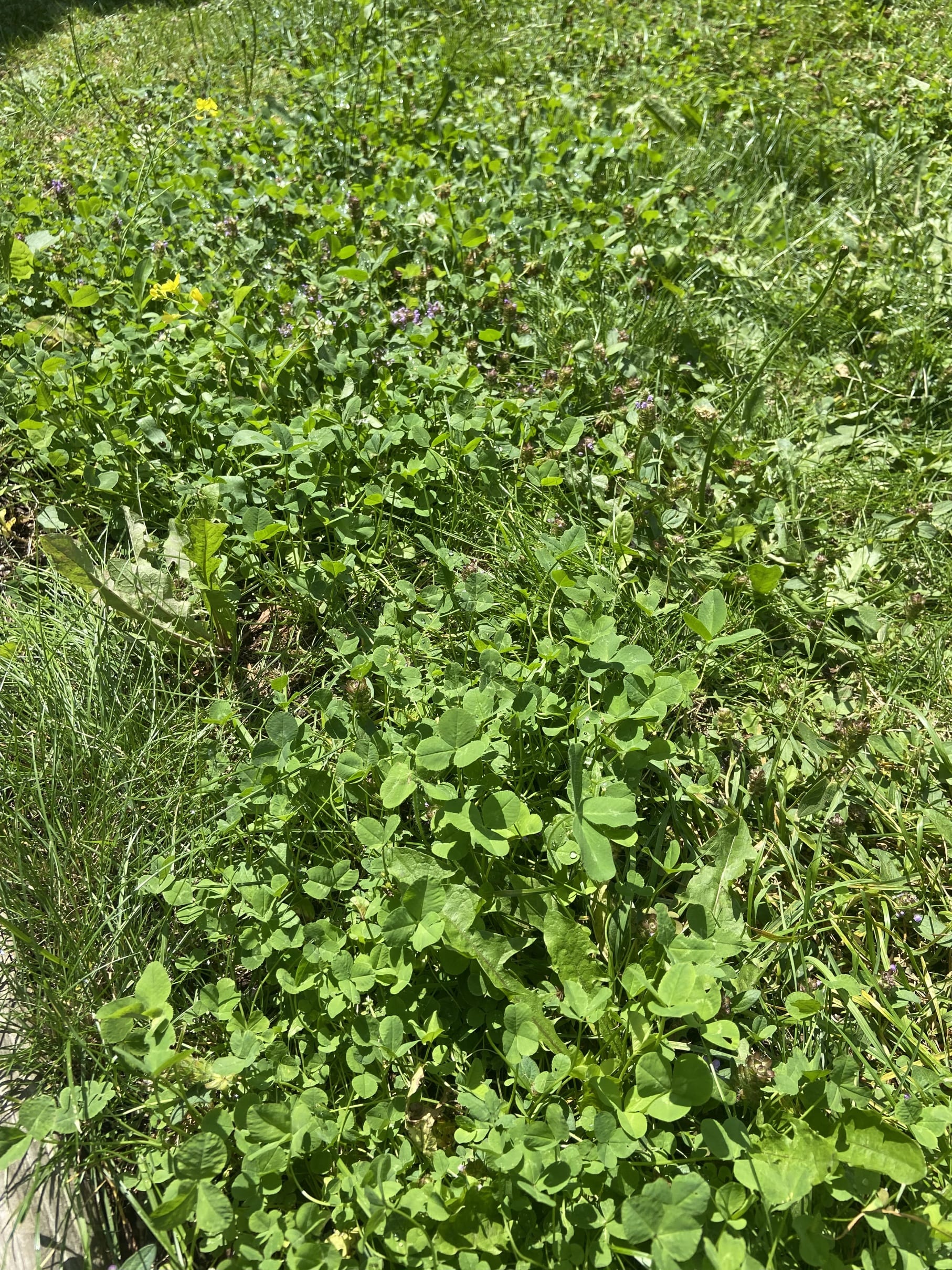
Lawn (n): ground (as around a house or in a garden or park) that is covered with grass and is kept mowed
Wild (n): a place without regulation or control; having a wild, free, or natural state or existence
Modern humans love their manicured lawns, a fact that has puzzled me for decades. But after careful pondering I think I know why: because these monoculture, “expanses of boringness”, as I like to call them, make us feel a sense of control, order and predictability- things that are often missing from our lives. Letting a lawn go wild is messy and uncertain, the kinds of things we try to avoid in the 21st century.
But for every upside of a trim lawn there are several downsides. Not only are they more time consuming, expensive and labour intensive than wild lawns, but they also might as well be moonscapes as far as ecosystems go. A wild lawn is home to dozens of species of plants, animals and fungi, whereas an orderly lawn barely welcomes a small handful.
I think its time for a paradigm shift: Wild is beautiful. Wild is home for countless creatures. Wild takes very little work. Wild is what our ancestors thrived in! Wild is where imagination and creativity come to play.
How can we let in the wild? The least we can do is set aside a part of our lawns for the small (the more the better). We can let go of the thoughts that orderly is more productive (it’s not) or more beautiful (it isn’t). And we can give up the illusion that we can control nature (we can’t).
If left to its own devices the beautiful orchestra of life will play itself out in pitch perfect tune. Tall grasses hide predators ready to snack on anyone who wants to munch on my produce. Blooming wildflowers attract pollinators, My yard stays green and lush during the summer drought, while my neighbours lawn shrivels, brown and dry.
Beyond leaving the yard alone so the bees and beetles can go about their business, there are a few other important things to consider, notably water and appropriate shelter. Water can be as elaborate as an embellished fountain or as simple as a shallow dish. (The hazard of water is that creatures tend to fall in and drown so I spend a bit of time each day rescuing them from a certain death). As for shelter, here’s some advice that I think most busy gardeners will love: don’t clean up your yard in the fall. Leave all the leaves alone! Let the stalks of your dead plants become part of the winter landscape. Nature will take care of it, so you don’t have to.
There are over 50 million acres of lawn in US and Canada (40 times the size of the Grand Canyon) and the vast majority of these lawns are manicured (fertilized, sprayed with pesticides, watered, and mowed). Whenever I see a grass lawn I imagine its potential and wish for a day when it can return to its wild ways.
Thank you for reading today! I hope you have a wonderful week 💚
Katherine
Hi Katherine, thank you for sharing this. I think about lawn often. In many places in Paris, the lawn is fenced throughout the winter. There is a label: "The lawn is resting". Then is open right before the summer. In busy parks it is fully destroyed throughout the summer, to then rest again. However, during covid, parks were closed. I remember the first day the park re-opened. The grass had grown a lot. It was wild and beautiful!