
Going Analogue Pt. 3
Luddite is a compliment.

I was recently called a Luddite for my views on technological progress*. This opinionated person probably thought he was insulting me. He was wrong. I took it as a compliment.
You see, many people think the Luddites were backwards, afraid of technology and progress - a common, but inaccurate view. I’d like to take a brief interlude from my analogue series to tell you the real story of the Luddites:
Life in the 17th century was difficult and not at all convenient. People had to do just about everything for themselves, and, as a result, often became extremely skilled craftspeople. The work was hard and the hours were long, but tradespeople could support their families and take pride in their work. In modern parlance, they were the original “start up entrepreneurs,” having total autonomy over their businesses as they made and sold their wares.
(Cool fact: tradespeople mostly worked out of cottages, which is where we get the term “cottage industry.”)
One such group of tradespeople were cloth and textile makers. They often learned their craft - whether it be sewing, spinning, weaving, or knitting - from family members who passed down the skills generation after generation. Merchants in the towns were happy to buy these high quality goods at fair prices, which allowed the textile makers a decent amount of financial security.
Then the factories came with their fancy machines and “division of labour,” where cloth could be made start to finish under one roof by employees of the factory owners. The tradespeople were very concerned about the future of their livelihoods - there was no way they could compete with the vastly lower prices of factory made textiles.
The important thing to know here is that Luddites weren’t worried about the technology in these factories - they were upset that they would lose their autonomy and the businesses they worked so hard to build (basically like how Walmart put many of the mom and pop shops out of business.)
Fast forward a few years and the factories are really taking Britain by storm. The textile workers desperately knew they needed to do something before their livelihoods were gone, so they began to organize (even though worker organizations weren’t really a thing yet).
At first they tried asking the British Parliament to step in and, at the very least, uphold the law that guaranteed wage protection. The Parliament sided with the factory owners and sent the tradespeople away (money talked, even back then).
By the early 1800’s, after ten years of trying to protect their rights peacefully and democratically, the textile workers were fed up. They invented themselves a leader - the fictional character, General Ned Ludd** - and they began a campaign to regain their livelihoods.
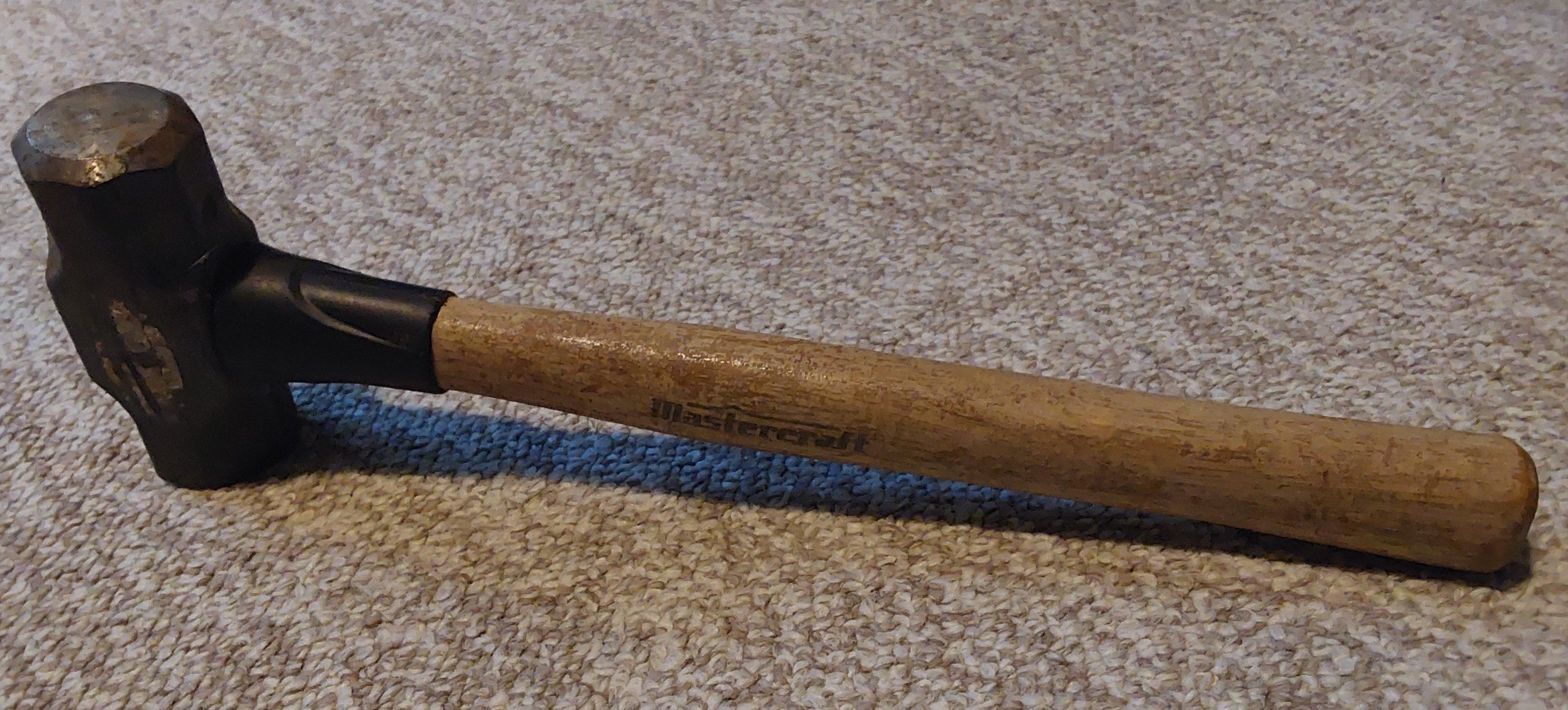
The Luddites, as they now called themselves, sent letters to factory owners telling them to remove the “obnoxious machines” or else they’d be visited by “General Ludd’s army” who would slip in under cover of night armed with machine-destroying sledgehammers. Of course, most factory owners told them to shove their demands. So every night the Luddites took their giant sledgehammer, Enoch** and smashed the machinery to bits.
The conflict raged for several years before the government stepped in to support the f a ctory owners. Many deaths and numerous arrests later the uprising was squashed and the vast majority of craftspeople were put out of business.
The moral of this story: tech isn’t the enemy, greed is. When tech is used as a tool for the betterment of most people I say “Yay! Let’s adopt it.” But when tech is used to take over the things that make us human, or when it furthers inequality, takes away livelihoods and makes us beholden to the billionaires, that’s absolutely not ok.
The Luddite story asks us to reflect on not how we use technology and how often. Not everything needs to be, or should be tech driven. Tech is a tool, and we should really think hard about ever making it more than that. Making things with our hands and doing things for ourselves is part of what makes us human. What would we be if everything was done for us? To me, a tech-driven world is not a utopia. It’s a nightmare.
Thank you for reading!
Cheers,
Katherine
*My view is that technological progress is not necessarily a good thing. Sometimes we go too far, replacing things that were not broken, that did not need replacing. I am also a firm believer that inconvenience is good for us. Too much comfort results in a lack of resilience and reduces our appreciation of what we have.
**General Ludd is based on an old story of an apprentice weaver who smashed his loom after his master whipped him for not working hard enough.
** names after, Enoch Taylor, the inventor of one of the offending machines.
Katherine, it seems like we’re especially in sync these days — in both our interests and our message! I agree with everything you wrote 100%.
Technology is a tool. And when it’s new and shiny, it quickly gets treated as a cure-all (or, alternatively, as something to fear).
Thank you for this thoughtful piece. I love your perspective!
Thank you for sharing. I thought about your writing the other day when I was at the opera house watching an interesting contemporary dance performance. The topic was about our interactions with technology and the changing boundaries. It was creative, powerful, and another interesting layer in this conversation about technology and its impact on our community.